

- マーケット分析
- マーケットセンチメント
CFTC report from May 10 covered information available on May 7
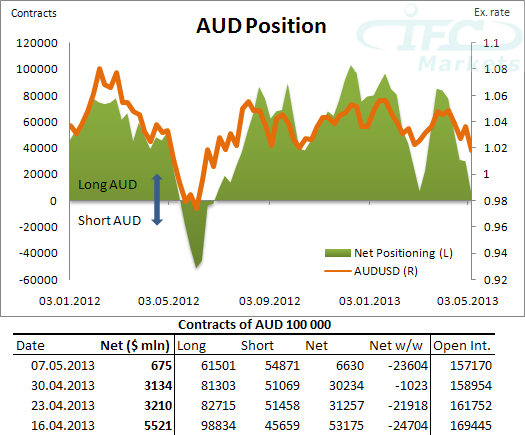
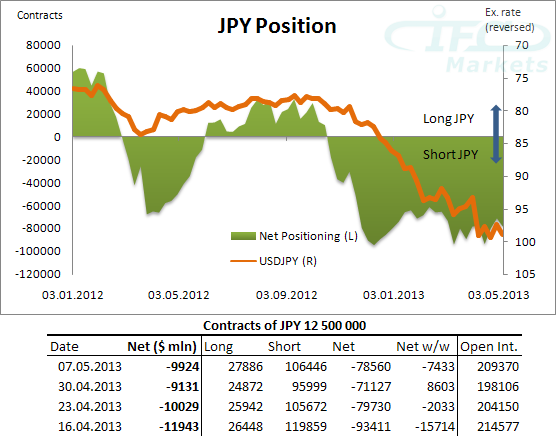
According to the latest data from Commodity Futures Trading Commission (CFTC), last week, the most significant changes occurred in the positioning on the Australian dollar and Canadian dollar. The net long speculative position on the Australian currency is very close to zero. We have a serious concern about its rate of contraction in the last few weeks, so we would not be surprised if we saw the net long position on Australian dollar transforming into a net short position. Meanwhile, the largest short position is still observed on the Japanese yen, followed by the British pound, the euro and the Canadian dollar. Overall positioning in the futures market testifies in the US dollar favor.
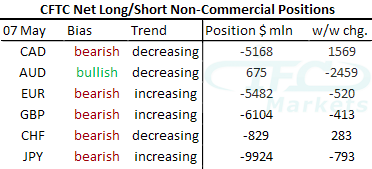
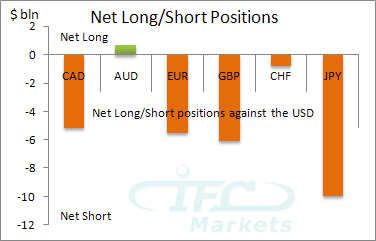
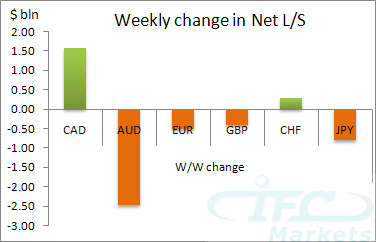
The net short position in the Canadian dollar declined again, moving the currency to the fourth place by largest short position. The position change is nearly 1.6 billion USD, the volume is estimated at 5.2 billion USD.
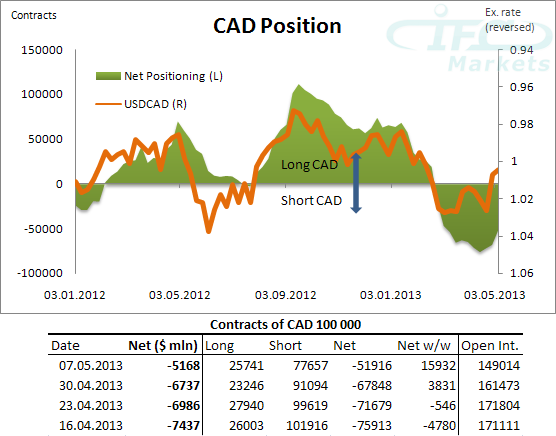
The net long position on the Australian dollar fell for the sixth consecutive time. This time it is very important - minus 2.5 billion USD. The position volume is estimated at 0.7 billion USD - the worst result since July 2012. However, the Australian dollar is the only one among six major currencies that keeps holding the net long position against the US dollar.
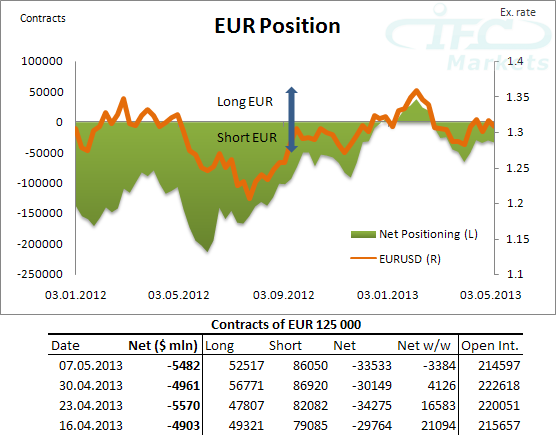
Last week, the euro showed an increase in the net short position. The position increased by 0.5 billion to -5.5 billion USD. The market sentiment remains bearish, and the single currency is the third currency on the largest short position among the six major currencies.
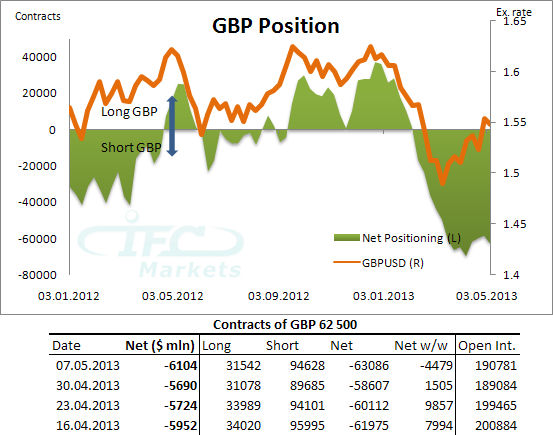
The net position on the British pound also rose. Last week, it was -6.1 billion USD. Expectations of market participants remain bearish and the pound is the second of six major currencies having the largest net short position.
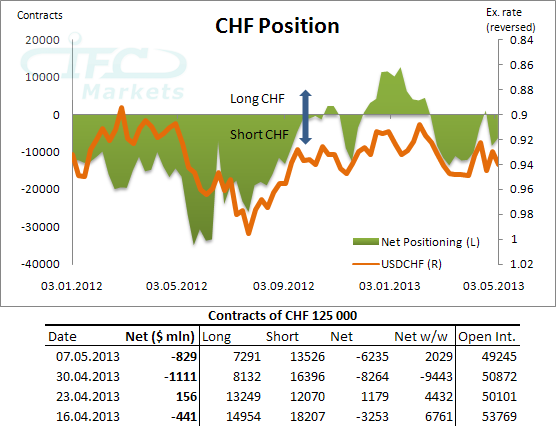
The net position of the Swiss franc remains negative, amounting -0.8 billion USD. The market sentiment is bearish, but close to neutral.
The yen continues holding the leadership on the largest net short position against the US dollar. Last week, the short position increased by 0.8 billion USD, reaching 9.9 billion USD. The sentiment remains bearish.
【重要な注意事項】:
本レポートは、当社の親会社であるアイエフシーマーケットが作成したものの邦訳です。本レポートには、当社のサービスと商品についての情報を含みますが、お客様の投資目的、財務状況、資金力にかかわらず、情報の提供のみを目的とするものであり、金融商品の勧誘、取引の推奨、売買の提案等を意図したものではありません。 本レポートは、アイエフシーマーケットが信頼できると思われる情報にもとづき作成したものですが、次の点に十分ご留意ください。アイエフシーマーケットおよび当社は、本レポートが提供する情報、分析、予測、取引戦略等の正確性、確実性、完全性、安全性等について一切の保証をしません。アイエフシーマーケットおよび当社は、本レポートを参考にした投資行動が利益を生んだり損失を回避したりすることを保証または約束あるいは言外に暗示するものではありません。アイエフシーマーケットおよび当社は、本レポートに含まれる不確実性、不正確性、不完全性、誤謬、文章上の誤り等に起因して、お客様または第三者が損害(直接的か間接的かを問いません。)を被った場合でも、一切の責任を負いません。
- コースを取って、


前回の市場センチメント
- 3月18日Weekly Top Gainers/Losers: Canadian dollar and Japanese yen
Over the past 7 days, prices for oil, non-ferrous metals and other mineral raw materials decreased but still remained high. As a result, the currencies of the commodity countries strengthened: the Canadian dollar, the Australian and New Zealand dollars, the Mexican peso, and the South African rand. The...
- 3月10日Weekly Top Gainers/Losers: Canadian dollar and New Zealand dollar
Оil quotes continued to rise over the past 7 days. Against this background, the currencies of oil-producing countries, such as the Russian ruble and the Canadian dollar, strengthened. The New Zealand dollar weakened after the announcement of negative economic indicators: ANZ Business Confidence and...
- 3月4日Weekly Top Gainers/Losers: American dollar and South African rand
Over the past 7 days, oil quotes continued to grow. Precious metals, including gold, fell in price. Against this background, the shares of oil companies increased, the Russian ruble strengthened, the Australian and New Zealand dollars, as well as the South African rand, weakened. The US dollar strengthened...