

- Analítica
- Disposição do mercado
CFTC report from May 3 covered information available on April 30
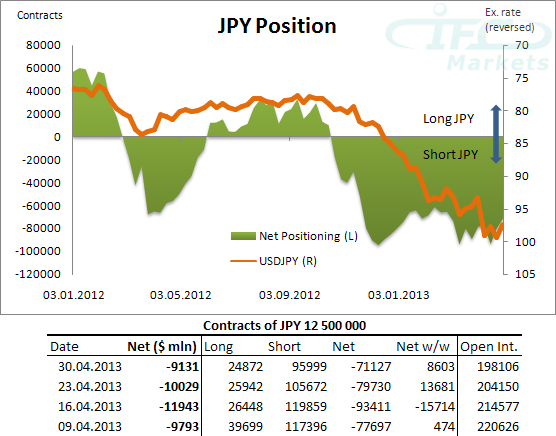
According to the latest data from CFTC, last week, the most significant changes occurred in the positioning on the Swiss franc, the Japanese yen and the euro. The net speculative position on the Swiss franc was negative again and short positions on the European currency and the yen declined. The overall picture is the testimony in favor of the US dollar. Five of the world most liquid currencies hold net short positions against the USD. The largest short position is observed on the Japanese yen, followed by the Canadian dollar, then - the British pound and finally, the euro. The net long speculative position is kept only on the Australian dollar.
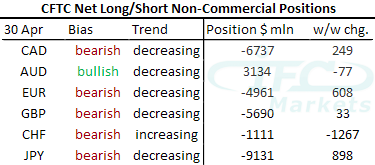
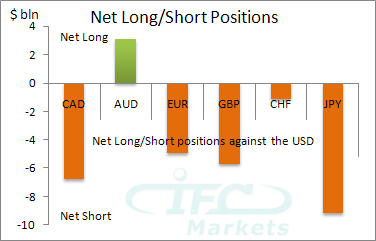
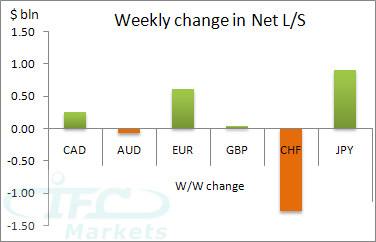
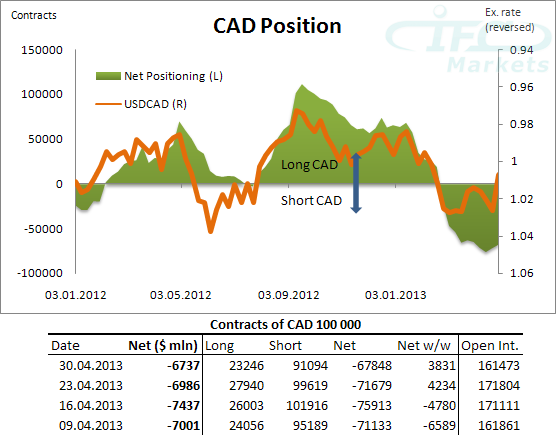
Net short position in the Canadian dollar fell, but only a little bit, to -6.7 billion USD. Thus, the Canadian dollar continues occupying the second place after the Japanese yen by the largest net short position among the six major currencies.
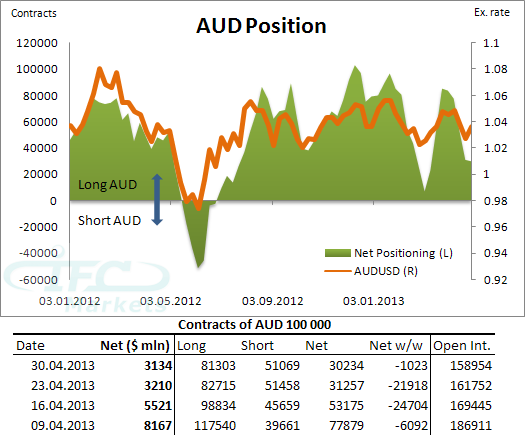
Net long position in the Australian dollar fell for the fifth consecutive time. This time the reduction was not significant. Position volume is estimated at 3.1 billion USD. However, the Australian dollar is the only one of six major currencies that continues holding net long position against the US dollar.
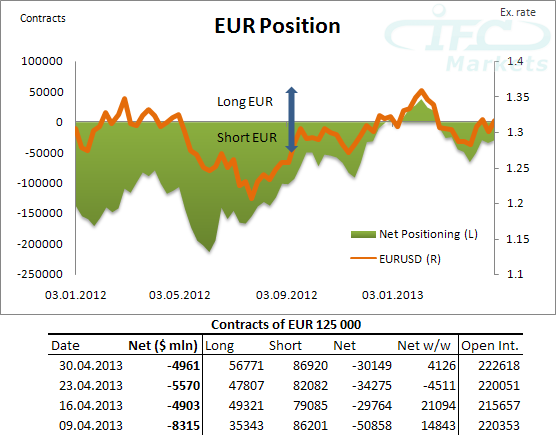
Last week, the euro showed a reduction in the net short position. Position decreased by USD 0.6 billion to -4.9 billion USD. Market sentiment remains bearish, and the single currency is the fourth-largest short position holder among the six major currencies.
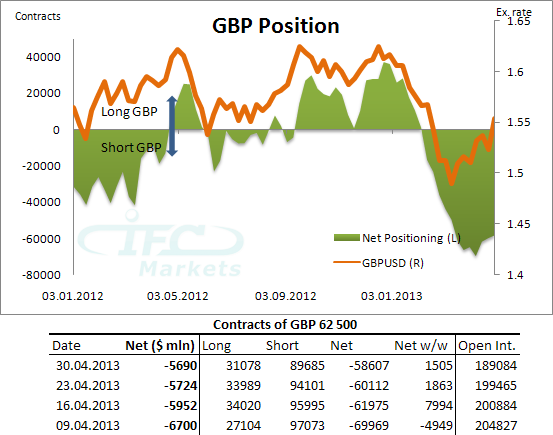
Net position on the British pound gradually reduced. Last week, it was -5.7 billion USD, almost unchanged comparing it to two weeks ago. But the expectations of market participants remain bearish, and so far away from the change the balance.
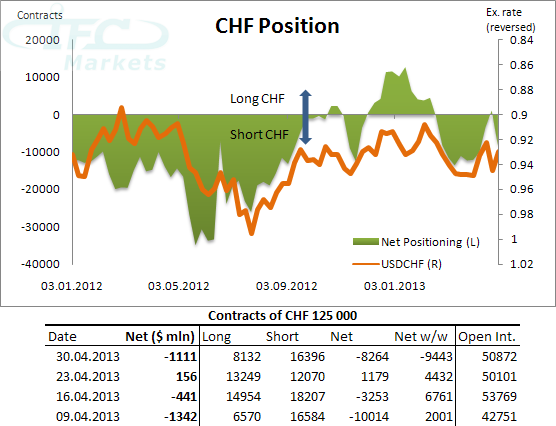
The net position on the Swiss franc turned negative once again, reaching -1.1 billion USD. The franc showed the most significant change in positioning last week. Market sentiment is bearish.
The yen continues holding the leadership by the largest net short position against the US dollar, despite its another reduction last week. Net short position on the currency is -9.1 billion USD. Sentiment remains bearish.
Nova ferramenta analítica exclusiva
Qualquer período- de 1 dia a 1 ano
Todos os grupos- Forex, Ações, Índices, etc.
Nota de rodapé:
Esta visão geral é apenas para fins informativos e educacionais, e é publicada de forma gratuita. Todos os dados contidos neste documento são obtidos de fontes públicas que são consideradas mais ou menos confiáveis. Ao mesmo tempo, não há garantias de que as informações são completas e precisas. No futuro, as visões separadas não são atualizadas. Todas as informações em cada visão geral, incluindo opiniões, índices, gráficos etc., são apresentadas apenas para fins informativos e não são aconselhamentos financeiros ou recomendações. Todo o texto e qualquer parte dele, assim como os gráficos não podem ser considerados como uma oferta para realizar quaisquer transações com qualquer ativo. A empresa IFC Markets e seus funcionários sob nenhumas circunstâncias não são responsáveis por quaisquer acções, realizados por uma pessoa durante ou depois de ler a visão geral.
- Obtenha certificado


Ultimas previsões
- 18mar2021Líderes de Crescimento e Queda: dólar canadense e iene japonês
Nos últimos 7 dias, os preços do petróleo, dos metais não ferrosos e outras matérias-primas minerais, embora tenham descido, mesmo assim, se mantiveram em um nível elevado. Graças a isso, houve um fortalecimento das moedas dos países de commodities: o dólar canadense, os dólares australiano...
- 10mar2021Líderes de Crescimento e Queda: Dólar canadense e dólar neozelandês
Nos últimos 7 dias, os preços do petróleo continuaram subindo. Devido a isso, houve um fortalecimento das moedas dos países produtores de petróleo: o rublo russo e o dólar canadense. O dólar da Nova Zelândia enfraqueceu após a publicação de indicadores econômicos negativos: ANZ Business Confidence...
- 4mar2021Líderes de Crescimento e Queda: Dólar americano e rand sul-africano
Nos últimos 7 dias, os preços do petróleo continuaram crescendo. Os metais preciosos, incluindo ouro, caíram de preço. Neste contexto, se verificou o aumento das ações petrolíferas, o fortalecimento do rublo russo e o enfraquecimento dos dólares australiano e neozelandês, bem como do rand sul-africano....