
- Analytics
- Trading News
- China-Us Supply Chain Competition
China-Us Supply Chain Competition
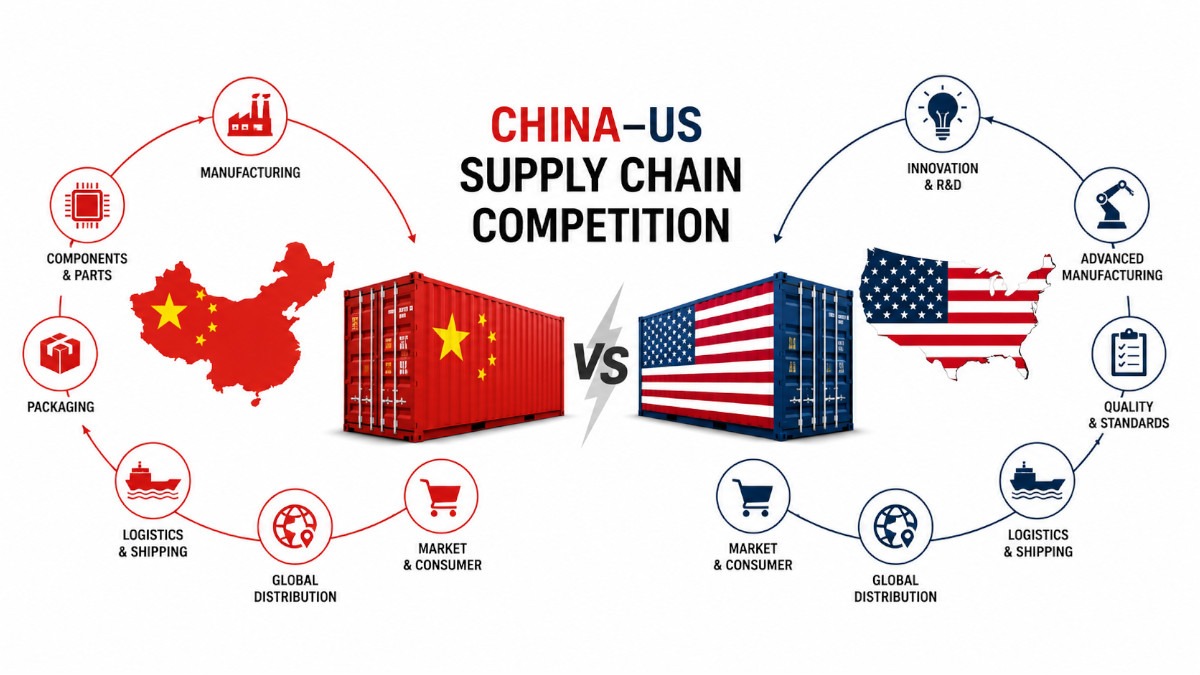
China added 10 more American companies to its entities list and blocked Chinese firms from purchasing products from another 46 US defence companies.
At first glance, this looks like another round of the US-China trade dispute. For macro traders, the more important question is what Beijing chose to target.
Among the companies added to the list were USA Rare Earth and MP Materials, two companies that sit at the centre of Washington's effort to build a domestic rare earth supply chain. Rare earths are essential for electric vehicles, military hardware, semiconductors, robotics, power systems, and renewable energy infrastructure.
China still dominates both the mining and, more importantly, the processing of many critical rare earth elements.
The signal from Beijing is, if the US wants to reduce its dependence on China, the path will be expensive, slow, and vulnerable to political pressure along the way.
Rare earths have become one of the few areas where China holds a genuine strategic advantage over the West. Unlike tariffs, export controls can directly affect industrial production and supply chains.
This step was caused by Washington efforts to build alternative supply chains. Since China restricted exports of key minerals during previous trade disputes, the US, Europe, Japan and other allies have accelerated investments in domestic mining, refining and processing capacity.
However, building an alternative rare earth ecosystem is a long term project - new mines take years to develop, processing facilities require significant capital and technical expertise. So even with aggressive investment, China is likely to remain a dominant supplier for years.
The actual economic impact of the latest restrictions is probably limited. Many of the defence companies affected already have minimal exposure to China. In that sense, the measures appear more symbolic than disruptive.
But symbolism matters in geopolitics
Despite recent meetings between Donald Trump and Xi Jinping and public commitments to improve relations, both sides continue to expand restrictions on technology, defence and strategic industries. Diplomatic engagement on one side, economic competition on the other.
For macro markets, the bigger story is that supply chains are now a core part of geopolitical strategy.
Countries are and were competing for control of critical technologies, industrial inputs and strategic resources. Rare earths sit near the top of that list.
China's use of export controls has increased significantly over recent years, highlighting Beijing's willingness to use supply-chain dominance as a policy tool. The objective is not necessarily to cause immediate disruption, but to increase leverage during future negotiations.
Key question is whether these actions remain largely symbolic or evolve into broader restrictions that directly affect global supply.
If tensions continue to rise, there are several areas worth watching
- Rare earth prices and processing capacity outside China.
- Government support for mining, refining and critical mineral projects in the US, Europe and allied countries.
- Industrial sectors heavily dependent on rare earth inputs, including electric vehicles, defence contractors and advanced manufacturing.
- Evidence that companies are accelerating supply-chain diversification despite higher costs.
Watch rare earth supply chains closely.
Good Luck!
New powerful tool, Technicals
New powerful tool, Technicals
Live Technical Analysis with instant forecast using most popular indicators and oscillators.
Try Now

If you don’t find a way to make money while you sleep, you will work until you die.- Warren Buffett