
- Analytics
- Trading News
- Meta Analysis: Not Addiction
Meta Analysis: Not Addiction
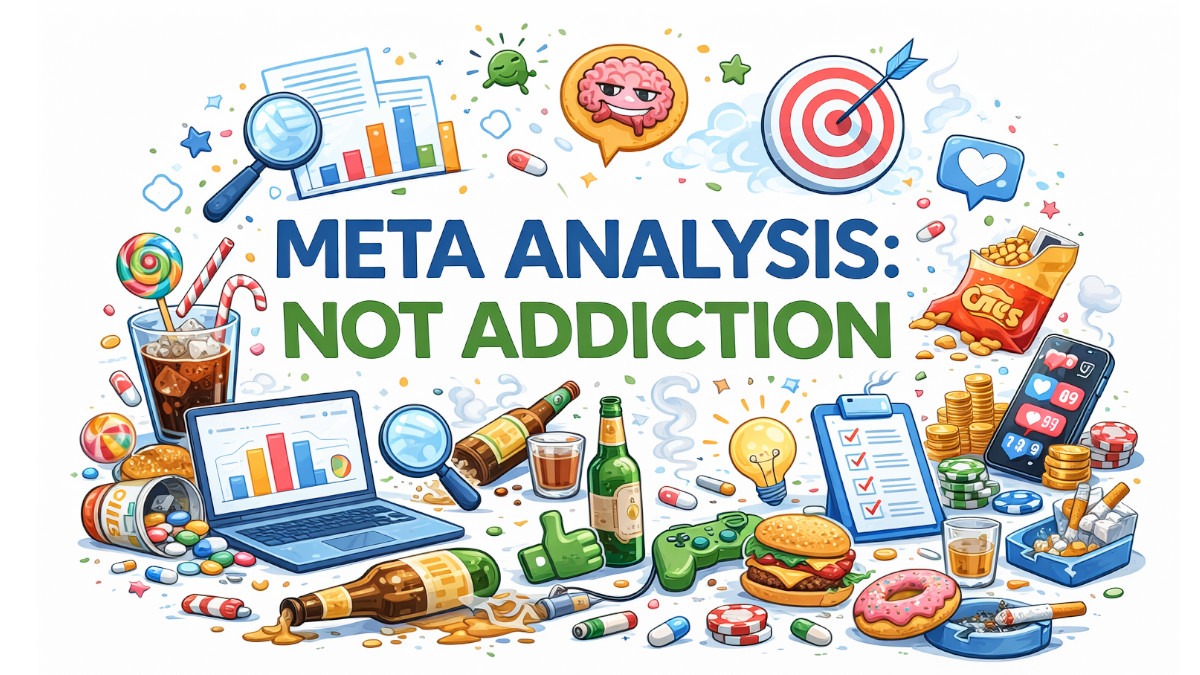
The lawsuit against Meta in California is a battle over semantics, design, and liability. Inside the company, employees have used technical language, even comparing their app to a drug to describe how they get users hooked. However, when speaking in court, executives pivot to much softer language, describing the app as if it were a harmless entertainment product or a simple tool for kids.
Social Media Addiction?
Meta is using a legal loophole based on medical definitions. Since "Social Media Addiction" isn't officially listed in the DSM-5 (the standard manual for mental disorders), executives can testify that their platforms aren't addictive without getting into legal trouble for lying.
At the same time, Instagram head Adam Mosseri has compared scrolling through a feed to watching a show on Netflix. This comparison is misleading because it ignores how the apps are actually built:
- Netflix: A show or movie has a clear ending.
- Instagram: The algorithm is designed as an infinite loop with no "stop" point.
Essentially, they are equating a finite activity with one specifically engineered to never end.
Meta Infinite Scroll
Internal records show that by 2018, the company already knew features like "infinite scroll" were problematic. However, they didn't make protective features like "Teen Accounts" or "Sleep Mode" the default until 2023–2026.
Critics argue this delay was intentional. By the time Meta finally introduced these safety tools, millions of young users had already spent years developing compulsive habits. From a business perspective, the platform effectively "locked in" its user base before implementing any real restrictions.
Just 3% - 107.4 million Active Users
In 2018, some employees suggested a public audit of the platform's features, potentially involving outside groups like the Center for Humane Technology. That audit never happened. Reports suggest leadership was concerned that an external review would recommend changes that would ultimately hurt the company’s profits.
Instead of an independent review, Meta conducted its own internal research. They started using the term "problematic use" and claimed it only affected about 3% of their users. While 3% sounds like a small percentage, it actually represents roughly 107.4 million people.
By using this specific framing, Meta shifted the focus away from their own product design and onto the individual user. It suggests the problem lies with a small group of "vulnerable" people rather than a system designed to be addictive for everyone.
Meta's goal: Maximizing Value - Time Spent
In court, Mark Zuckerberg describes Meta's goal as "maximizing value" for the user. However, in the tech industry, "value" is usually just a code word for Time Spent.
- The platform uses behavioral psychology to keep people engaged. For example, the "Like" button acts as a variable reward, an unpredictable hit of social validation that encourages users to keep checking the app for a dopamine boost.
- This creates a clear conflict of interest. If the entire system is engineered to keep users on the platform for as long as possible, it is logically inconsistent for Meta to claim the design is also intended to help people walk away.
Meta Shifts the Blame
In its defense, Meta frequently points to its "parental controls," highlighting that parents have the option to set a 15-minute daily limit for their teens.
Critics argue that this creates a massive power imbalance. It essentially puts a busy parent in a battle against a multi-billion dollar algorithm that was built by thousands of engineers specifically to bypass human willpower.
By focusing on these controls, Meta shifts the blame. It frames compulsive use as a failure of parenting rather than what it actually is: a successful result of the platform's engineering.
New powerful tool, Technicals
New powerful tool, Technicals
Live Technical Analysis with instant forecast using most popular indicators and oscillators.
Try Now

If you don’t find a way to make money while you sleep, you will work until you die.- Warren Buffett