

- Education
- Introduction to Trading
- What is Leverage
What is Leverage in Forex
Leverage is one of those words that gets thrown around in trading circles like everyone's supposed to just know what it means. But if you're new to forex, it can sound more complicated than it actually is.
In plain terms, leverage is what lets you control a big chunk of currency with a relatively small amount of your own money. It's the reason a trader with a few hundred dollars can open a position worth tens of thousands. Sounds great, right? Well, it can be, but it's also the reason so many beginners blow up their accounts faster than they expected. Shall we?
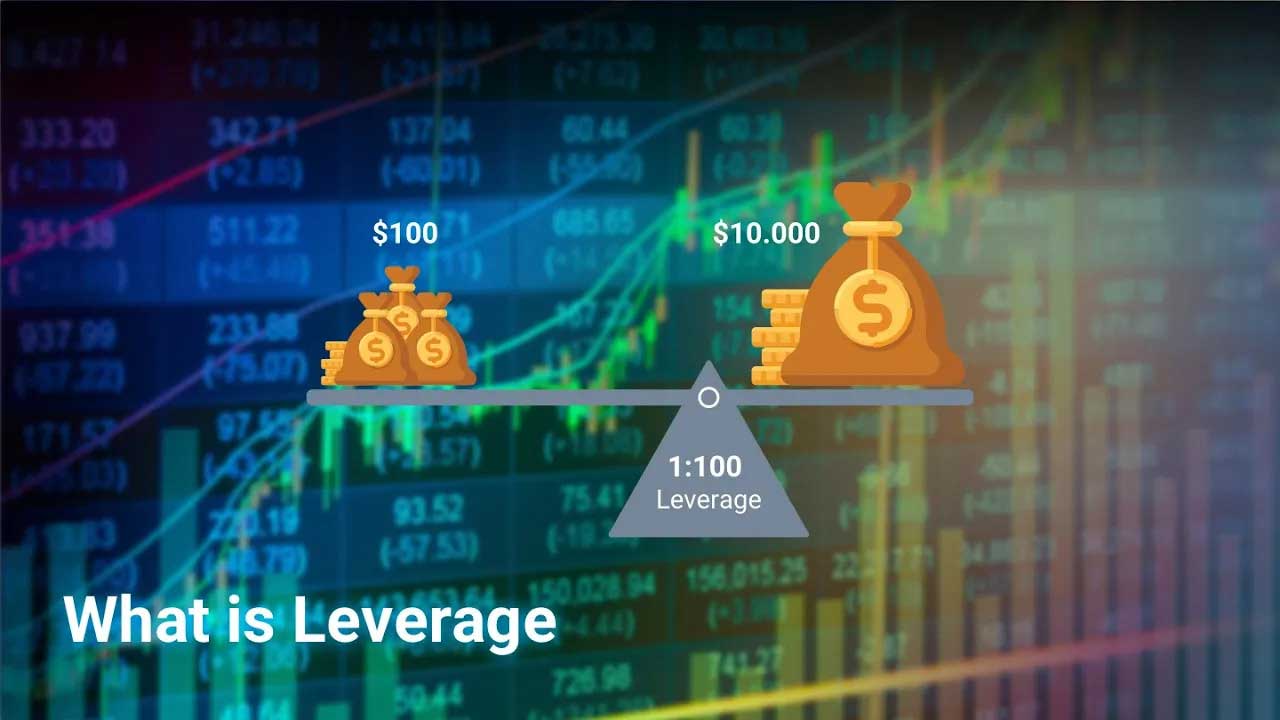
Key Moments
- Leverage lets you trade larger positions than your account balance would normally allow, by essentially borrowing capital from your broker.
- It's expressed as a ratio, like 50:1 or 100:1, and it amplifies both your gains and your losses equally.
- There is no universal right leverage, it depends on your experience, risk tolerance, and how much you can afford to lose.
- Calculating leverage is just a matter of comparing the size of your position to the size of your own capital behind it.
What is Leverage in Forex
Leverage in forex is essentially borrowed buying power that your broker gives you so you can control a larger trading position than your own money would allow on its own.
Say you have $1,000 in your account. Without leverage, that $1,000 is all you can trade with. But with 100:1 leverage, that same $1,000 lets you control a position worth $100,000.
Your broker is basically fronting you the rest, and in exchange, you agree to keep a certain amount of your own money, called margin, set aside as a kind of security deposit. Leverage is the most commonly used tool in trading and it will help you better understand "What is Forex trading and how does it work" all about.
How Does Leverage Work in Forex
Say your broker offers 50:1 leverage, that means for every $1 you put up, you can control $50 worth of currency. If you deposit $2,000, you could open a position worth up to $100,000.
Now, the currency market moves in tiny increments, fractions of a cent, so without leverage, those small moves wouldn't be worth much to a regular trader. But when you're controlling $100,000 instead of $2,000, those tiny moves start to matter a lot more. A 1% move in your favor on a $100,000 position is $1,000 - a 50% return on your original $2,000. That's the appeal of leverage.
But it works exactly the same way in reverse, that same 1% move against you wipes out half your account. Leverage amplifies everything, both directions, with zero bias toward you.
Brokers require you to maintain a minimum amount of margin in your account to keep leveraged positions open. If the market moves against you enough that your account can't cover potential losses, you'll get what's called a margin call, where the broker asks you to add more funds, or the position gets closed automatically to protect both you and them. This is why traders get wiped out so quickly with high leverage, market doesn't need to move much before the cushion disappears entirely.
What Leverage Should I Use for Forex
This is the question every new trader asks, and honestly, there's no single right answer, it depends heavily on your experience and how much risk you're comfortable with.
If you're just starting out, lower leverage — something like 10:1 or even 5:1, gives you more breathing room. It means the market has to move further against you before you're in real trouble, which gives you time to learn, make mistakes, and adjust without losing your shirt on day one.
Higher leverage, like 100:1 or 500:1, might look tempting because of the profit potential, but it also means tiny market wobbles can wipe out your account in minutes. Professional traders who do use high leverage typically pair it with tight risk management; they're only ever risking a small percentage of their account on any single trade, regardless of how much leverage is available to them.
A good rule of thumb: never use leverage just because it's offered. Use only as much as you'd be comfortable with if the trade went completely wrong.
 254,697
Forex Leverage Example
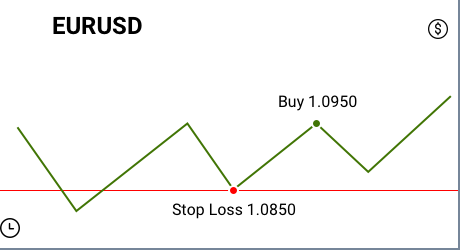
How does Leverage Work Account balance is $1000 with 1:100 leverage. You have decided to open a buy position with EURUSD pair with a volume of 10.000. The position is opened at price 1.0950. Stop Loss order is set at 1.0850 price. The required margin for this position is equal to €10 000 x 1/100 x 1.095 = $109.50. If you do not want to spend much time on calculating margin for all of your positions you may use our Margin Calculator. In case the market goes in different direction, your loss will equal to $100, since 1 pip value in EURUSD currency pair is $1 (for 10.000 volume), and the difference between your opened price and Stop Loss level is 100 pips. If you do not use Stop Loss order, you may lose pretty higher than $100, depending when you will close your position. Stop Loss order can be used both for Long and Short positions and its level is decided by you; that is why it is one of the best risk management tools in online trading.
Other than Forex, leverage can be used in cryptocurrency, stocks, index markets. A common way traders use leverage in crypto market is to increase their capital's liquidity. Using leverage to keep the same position with lower collateral, allows traders to put their assets to a better use, for instance trading other decentralized assets. To understand how leverage works in the cryptocurrency market, you first need to know What is Leverage in Crypto Trading.
How to Calculate Leverage in Forex
Calculating leverage is simpler than it sounds. It's just the ratio between the total size of your position and the amount of your own money backing it.
The formula looks like this:
Leverage = Total Position Size ÷ Your Own Capital (Margin)
So if you're using $1,000 of your own money to control a $50,000 position, your leverage is:
$50,000 ÷ $1,000 = 50
That's 50:1 leverage.
You can also flip this around to figure out how much margin you'll need for a trade if you already know the leverage ratio your broker offers. If your broker gives you 100:1 leverage and you want to open a $100,000 position, you'd need:
$100,000 ÷ 100 = $1,000 in margin
Most trading platforms actually calculate this for you automatically the moment you enter a trade size, showing you exactly how much margin will be tied up. But it's worth understanding the math yourself, if only so you're never caught off guard by how much of your account is actually at risk on a given position.
Conclusion
Leverage is neither good nor bad on its own, just a tool, and like any tool, it depends entirely on how it's used. Used thoughtfully, it lets your capital stretch further and makes small, steady moves in the market actually worth trading. Used recklessly, it turns ordinary market noise into account ending losses. The traders who last in forex are the ones who understand exactly how much risk they're taking on with every trade, and who choose leverage that lets them stay in the game long enough to actually get good at it.
FAQs
How does Forex Work?
Forex (Foreign Exchange) is a huge network of currency traders, who sell and buy currencies at determined prices, and this kind of transfer requires converting the currency of one country to another. Forex trading is performed electronically over-the-counter (OTC), which means the FX market is decentralized and all trades are conducted via computer networks.
What is Forex Market?
The Forex market is the largest and most traded market in the world. Its average daily turnover amounted to $6,6 trillion in 2019 ($1.9 trillion in 2004). Forex is based on free currency conversion, which means there is no government interference in exchange operations.
What is Forex Trading?
Forex trading is the process of buying and selling currencies at agreed prices. Most currency conversion operations are carried out for profit.
What is The Best Forex Trading Platform?
IFC Markets offers 3 trading platforms: MetaTrader4, MetaTrader5, NetTradeX. MT 4 Forex trading platform is one of the most downloaded platforms which is available on PC, iOS, Mac OS and Android. It has different indicators necessary for making accurate technical analysis. NetTradeX is another trading platform offered by IFC Markets and designed for CFD and Forex trading. NTTX is known for its user-friendly interface, reliability, valuable tools for technical analysis, distinguished functionality and the opportunity to create Personal Composite Instruments (PCI) which is available specifically on NetTradeX.

Was this article helpful?
 You can study CFD trading more thoroughly and see CFD trading examples in the section How To Trade CFDs Visit Educational Center
 Register with IFC Markets Now
Global Access to Financial Markets from a Single Account
