- Analytics
- Trading News
- Hormuz Bottleneck
Hormuz Bottleneck
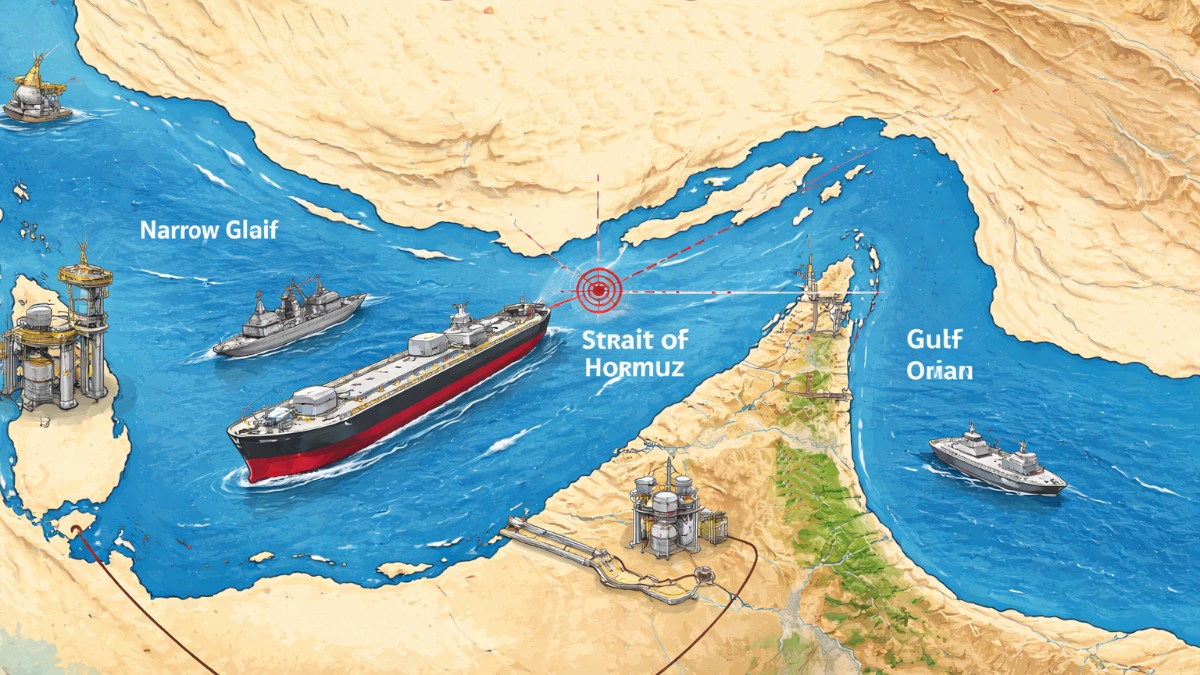
The Strait of Hormuz, just 21 miles wide at its narrowest point, is currently closed. Through this corridor flows roughly 20% of the world’s traded oil, but the Iran Revolutionary Guard Corps (IRGC) has declared complete control over the waterway. Following strikes on over 10 tankers and threats of missile or drone attacks against any transiting vessel, global traffic has halted.
The consequences are manifesting in real-time. Abu Dhabi Ports reports a decline in arrivals, Cosco Shipping has suspended bookings on affected routes, and Qatar Gulf International Services has paused specific energy operations. The logistical infrastructure of the global energy supply is seizing up.
Prices have reacted violently to the disruption:
- Oil: Brent crude surged over 12% in two days, the largest jump since 2020, now it’s near $85 .
- Natural Gas: European futures spiked more than 60% in just 48 hours, but it is stabilizing now.
- The Tail Risk: Goldman Sachs warns that if the strait remains closed for five weeks, Brent could reach $100 a barrel.
For Asia, the stakes are high. South Korea, Japan and India are almost entirely dependent on Persian Gulf exports. While the US is in a more fortunate position regarding direct supply, it remains vulnerable to supply chain disruptions, rising input costs, and the global inflationary spillovers of a sustained energy shock.
Winners & Losers
The Beneficiaries
- Energy Complex: US oil producers are seeing margins expand as Brent rises, while domestic natural gas producers see increased demand as LNG becomes the primary alternative to Gulf supplies.
- Defense Contractors: With strikes on Iran depleting military stockpiles, a major restocking cycle is expected. Defense executives are scheduled to meet at the White House this week to address these needs.
Challenged Sectors
- Semiconductors: South Korean Samsung and SK Hynix have seen their stock prices punished. But this sell-off may represent a buying opportunity rather than a loss of fundamental value.
- Shipping: This sector is an unambiguous loser. Between suspended bookings and spiking insurance costs, any company reliant on Persian Gulf supply chains faces immediate cost increases.
- Airlines: Carriers face a straightforward threat from sharply rising jet fuel costs. With thin margins, sustained oil prices above $80 will force fare increases that could dampen global travel demand.
New powerful tool, WTI Crude Technicals
New powerful tool, WTI Crude Technicals
Live Technical Analysis with instant forecast using most popular indicators and oscillators.
Try Now

If you don’t find a way to make money while you sleep, you will work until you die.- Warren Buffett