- Education
- Forex Technical Analysis
Technical Analysis in Forex Trading
In the high-velocity landscape of the global currency markets, the ability to interpret price movement is the primary differentiator between speculative guesswork and professional trading. As the most liquid financial market in the world, the Foreign Exchange (Forex) market processes trillions of dollars in daily turnover, creating a rich tapestry of data points.
For the modern trader, navigating this environment requires more than just an understanding of geopolitical events; it demands a rigorous application of technical analysis to decode the psychological and statistical drivers of price.
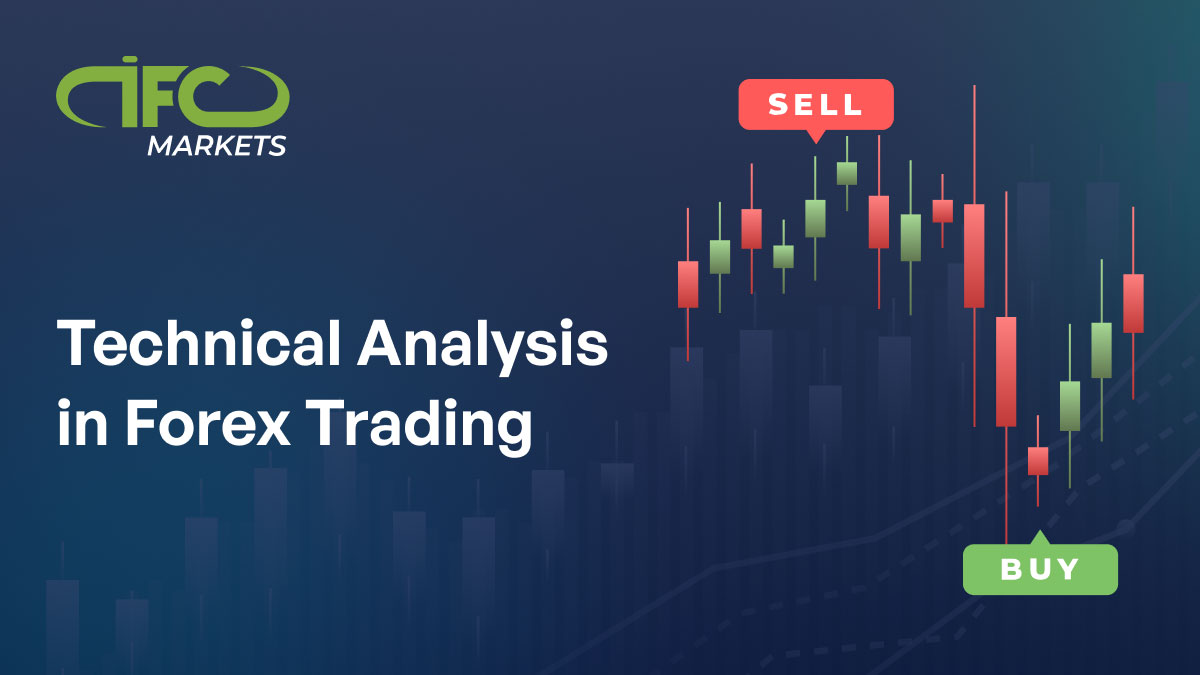
Technical analysis serves as the "language" of the market. By examining historical price action, trading volumes, and mathematical indicators, market participants can identify recurring patterns and trends. While fundamental analysis focuses on the "why" behind a currency’s value—such as interest rates or GDP growth—technical analysis focuses on the "what," looking directly at how the market is reacting in real-time.
In an era where institutional algorithms and high-frequency trading dominate, understanding the technical structure of the market is essential for timing entries, managing risk, and identifying high-probability opportunities.
Key Moments
Professional traders prioritize specific instances when utilizing this indicator to ensure maximum efficacy:
- Evidence-Based Decision Making: Technical analysis relies on the premise that all known market information is already reflected in the current price of a currency pair.
- Pattern Recognition: History tends to repeat itself in financial markets due to collective human psychology, allowing traders to use past chart formations to forecast future movements.
- Risk Management Framework: Technical levels—such as support, resistance, and moving averages—provide objective data points for setting stop-losses and take-profit targets.
- Timeframe Versatility: The principles of technical analysis are fractal, meaning they can be applied with equal validity to scalping (minutes), swing trading (days), or long-term investing (months).
- Algorithmic Synergy: In 2026, technical analysis is a core component of automated trading systems, making it necessary for retail traders to understand these levels to stay aligned with institutional flow.
What is Forex Technical Analysis
Forex technical analysis is the systematic study of historical price movements and market data to forecast future price directions and identify profitable trading opportunities. It operates on the core philosophy that "price discounts everything"—meaning that economic, political, and psychological factors are already integrated into the exchange rate visible on a chart.
Rather than analyzing the balance sheet of a nation, the technical analyst examines the geometry of the price chart, looking for trends, support and resistance zones, and momentum shifts.
The methodology utilizes three primary pillars: price action, chart patterns, and technical indicators. Price action involves reading raw data through candlesticks or bars to gauge market sentiment. Chart patterns, such as "Head and Shoulders" or "Double Bottoms," help identify potential reversals or continuations.
Finally, technical indicators—mathematical calculations based on price and volume—provide secondary confirmation of momentum, volatility, and trend strength. By combining these elements, a professional trader builds a "confluence" of evidence to support a trade thesis, aiming to shift the odds in their favor over a series of trades.
Does Technical Analysis Work in Forex
The short answer is yes, technical analysis is highly effective in Forex, though it is not a predictive "crystal ball." Its efficacy stems from several unique characteristics of the currency market that favor a technical approach.
First, the Forex market is driven by high liquidity. Because pairs like EUR/USD or USD/JPY involve massive volumes, price movements tend to be smoother and more "behaved" than in low-cap stocks. This liquidity ensures that technical levels—such as the 200-day Moving Average or major psychological levels (e.g., 1.1000)—are respected by a vast majority of market participants, including central banks and hedge funds.
When millions of traders and algorithms look at the same technical level, it often becomes a self-fulfilling prophecy; if everyone believes a support level will hold, they buy at that level, effectively creating the support they expected.
Second, the market reflects human and algorithmic psychology. Markets are moved by the collective emotions of fear, greed, and uncertainty. Technical analysis quantifies these emotions. A "breakout" is a visual representation of a surge in confidence, while a "divergence" on an oscillator suggests that momentum is fading despite higher prices. Furthermore, in 2026, roughly 80% of market volume is driven by algorithms.
These programs are coded with technical parameters—Fibonacci retracements, Bollinger Band widths, and RSI levels. Consequently, the market moves technically because the primary participants are programmed to react to technical triggers.
How to Use Technical Analysis in Forex Trading
Utilizing technical analysis professionally requires a structured, step-by-step approach to avoid "analysis paralysis"—a state where too many indicators lead to conflicting signals. Follow these steps to build a robust technical framework:
1. Identify the Market Environment (Trend Analysis)
- Uptrends are characterized by "higher highs" and "higher lows".
- Downtrends are marked by "lower highs" and "lower lows".
- Ranging markets move sideways between established horizontal boundaries. Professionals often use a Moving Average (e.g., 50-period SMA) to quickly identify the trend. If the price is above the average, the bias is bullish; if below, the bias is bearish.
2. Plot Support and Resistance Levels
Once the trend is clear, you must identify where the price is likely to stall or reverse.
- Support is a "floor" where buying interest is strong enough to overcome selling pressure.
- Resistance is a "ceiling" where selling pressure overcomes buying interest. Look for "swing points" on the chart where the price has touched and bounced at least twice. These zones represent high-liquidity areas where institutional orders are often clustered.
3. Analyze Candlestick Formations (Sentiment)
Candlesticks provide the most granular view of market psychology. Instead of just looking at the price, look at how the price got there.
- Rejection Candles: Long wicks (like a "Pin Bar") suggest the market tried to move in one direction but was aggressively pushed back.
Momentum Candles: Large, solid bodies with small wicks indicate strong conviction in the current direction.
Combining a candlestick signal with a support or resistance level is one of the most powerful "high-confluence" entries in trading.
4. Apply Complementary Indicators
Indicators should be used as secondary filters, not primary triggers.
- Oscillators (RSI, Stochastics): Use these to identify overextended markets (overbought/oversold) or to spot "divergence," where the price makes a new high but the indicator does not, signaling a potential reversal.
- Volatility Indicators (ATR, Bollinger Bands): These help you understand market "noise." In high-volatility environments, you may need wider stop-losses to avoid being "stopped out" by random price spikes.
5. Multi-Timeframe Analysis
A professional trader never looks at a single chart. They use a "top-down" approach:
- Daily/Weekly Chart: To find the major trend and key structural levels.
- 4-Hour/1-Hour Chart: To identify the current momentum and intermediate patterns.
- 15-Minute Chart: To fine-tune the entry and minimize the stop-loss distance. By ensuring the 15-minute entry aligns with the Daily trend, you significantly increase your win rate.
6. Define Risk and Reward
Before clicking "buy" or "sell," the technical analyst calculates the Risk-to-Reward Ratio. Based on technical levels, where will you be proven wrong (Stop-Loss)? And where is the next logical barrier for the price (Take-Profit)? A professional aim is usually a ratio of 1:2 or higher, ensuring that even if they are right only 40% of the time, the account remains profitable.
Forex Indicators FAQ
What is a Forex Indicator?
Forex technical analysis indicators are regularly used by traders to predict price movements in the Foreign Exchange market and thus increase the likelihood of making money in the Forex market. Forex indicators actually take into account the price and volume of a particular trading instrument for further market forecasting.
What are the Best Technical Indicators?
Technical analysis, which is often included in various trading strategies, cannot be considered separately from technical indicators. Some indicators are rarely used, while others are almost irreplaceable for many traders. We highlighted 5 the most popular technical analysis indicators: Moving average (MA), Exponential moving average (EMA), Stochastic oscillator, Bollinger bands, Moving average convergence divergence (MACD).
How to Use Technical Indicators?
Trading strategies usually require multiple technical analysis indicators to increase forecast accuracy. Lagging technical indicators show past trends, while leading indicators predict upcoming moves. When selecting trading indicators, also consider different types of charting tools, such as volume, momentum, volatility and trend indicators.
Do Indicators Work in Forex?
There are 2 types of indicators: lagging and leading. Lagging indicators base on past movements and market reversals, and are more effective when markets are trending strongly. Leading indicators try to predict the price moves and reversals in the future, they are used commonly in range trading, and since they produce many false signals, they are not suitable for trend trading.
The Basic Concepts of Forex Technical Analysis
Technical analysis is an integral part of trading. It can be hard for novice traders to spot chart patterns and determine next tendencies in the market and act on them accordingly, yet it's a must learn, if you want to succeed in trading.
Dow Theory (Dow Jones Theory) Explained
Dow only took in consideration closing prices. Averages had to close higher than a previous peak or lower than a previous trough to be significant. Intraday penetrations did not count.
Forex Chart Patterns
Traders often use chart patterns when conducting technical analysis. The behavior of the Forex market shows patterns, and since chart patterns usually appear during trend reversals or when trends begin to form, traders often follow them when trading. To strengthen your trading knowledge, you can read our other article about "What is Forex trading and how does it work".
Forex Technical Indicators and Oscillators
Technical indicators are inseparable part of technical analysis. They aim to predict future market movements and help a trader to be oriented in the market. There is a very large range of indicators which are used by the traders for forecasting the market. Some people prefer an indicator which is proved to work in the past; others try to experience new ones to reach success. Examples of such technical indicators are trading indicators by Bill Williams, Oscillators, Trend and Volume indicators.

Was this article helpful?

Not sure about your Forex skills level?
Take a Test and We Will Help You With The Rest